
Why You Forget Names, and What Actually Helps
Names are the hardest thing the human memory is asked to do, and the reason has nothing to do with how good your memory is.
Forgetting a name is usually a failure to encode it rather than a failure to store it. A name is arbitrary, it arrives during the most socially demanding three seconds of a conversation, and it connects to nothing else you know about the person. Slowing the introduction down, repeating the name once out loud and attaching it to a single concrete detail fixes most of it. Sleep and divided attention matter more than any supplement.
A name is the hardest thing memory is asked to do
You can remember that the man across the table is an architect, drives a green car, has two daughters and once broke his wrist skiing. What you cannot remember is that he is called Paul.
That is not a flaw in you. It is a structural feature of how memory works, and it has a name: the baker-Baker paradox. Told that a man is a baker, people recall it easily. Told that the same man is named Baker, they recall it far less often. Same word, same syllables, entirely different survival rate.
The difference is connection. The job of baker connects to bread, to flour, to early mornings, to a shop you know. The name Baker connects to nothing. It is a label attached to a face by pure arbitrary decision, and memory is built to hold meaning rather than labels.
Add the circumstances. A name arrives in the first three seconds of meeting someone, which is precisely when you are busy deciding where to stand, what to do with your hands and what to say next. The name is spoken once, quietly, during the noisiest moment of the encounter.
You did not forget it. You never encoded it.
Why names fail when other details survive
The same conversation, two kinds of information, two very different outcomes.
| A name | A fact about the person | |
|---|---|---|
| Meaning of its own | None. Arbitrary | Connects to things you know |
| Number of hooks in memory | One, the face | Many, through the topic |
| When it arrives | In the first three seconds | Throughout, when you are settled |
| How often it is repeated | Usually once | Often several times |
| Your attention at the time | Split between listening and social calculation | Focused on the conversation |
| Chance of recall a week later | Low | High |
Why it gets worse after about 50
Two things change and neither of them is memory failing.
The first is retrieval speed. The word is there, the path to it is slower, and a name has only one path. This is the tip-of-the-tongue state, and research on it has consistently found that older adults get into it more often and get out of it just as accurately, given a few more seconds.
The second is interference. At 55 you have met thousands more people than you had at 25. More Pauls are stored. Each new Paul has to compete with every previous one for the same retrieval path, and the more crowded the path, the slower the answer.
There is a third thing worth naming because it does real damage: expecting the failure. Once someone believes their memory is going, a normal blank becomes evidence, anxiety rises, and anxiety measurably worsens retrieval. The blank then confirms the belief. Everybody, at every age, blanks on names.
The three seconds that decide whether you remember
Everything that decides whether you will remember a name happens in the first three seconds, before there is anything to recall.
Say it back. Not as a trick, as a request: sorry, Paul? That single repetition roughly doubles the chance the name survives, because it moves the word from something you heard to something you produced.
Attach it to one concrete thing. Not a clever image, just a link: Paul the architect. Two items with a connection are far easier to hold than one item with none.
Use it once more before you leave. In the middle of the conversation, not at the door. A second retrieval, minutes after the first, is worth more than ten repetitions in a row.
Five things that actually help
In order of how much difference they make.
Sleep seven hours
The largest lever on this list by a distance. Memory consolidation happens during sleep, and one short night measurably damages next-day recall. No technique and no supplement outranks it.
Stop splitting your attention
Most forgetting is a failure to encode, and encoding needs attention. A phone in your hand during an introduction guarantees the name never entered. This one is free and it works immediately.
Repeat the name out loud once
Two seconds, roughly doubles the survival rate. The most cost-effective thing on this page.
Attach one concrete detail
Paul the architect. One link turns an arbitrary label into part of a small network.
Retrieve it again a few minutes later
Testing yourself beats rereading. Deliberately pulling the name back once, mid-conversation, is worth more than repeating it ten times at the start.
Notice what is not on this list. Nothing here costs money, and the two that matter most are behavioural. Any page that puts a supplement above sleep on this list is selling you something.
About the product behind this blog
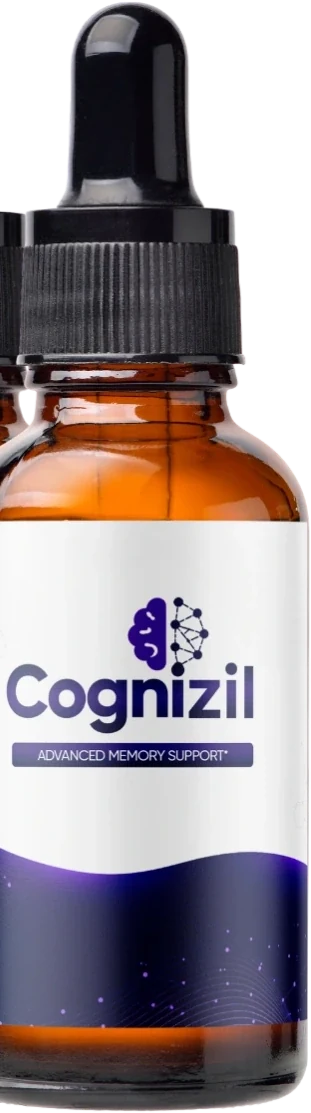
Cognizil is a once-daily liquid memory supplement: 7 mcg of chromium plus a 15.47 mg blend of 21 extracts and amino acids, with a 180-day money-back guarantee. We publish the dose gap as plainly as the price.
Add To CartRead the label firstWhere a supplement fits, honestly
After the five things above, not instead of them.
The honest ceiling for a memory supplement in a healthy adult is a modest difference in attention, which shows up as fewer lost words and fewer walks into a room for a forgotten reason. That is worth having. It is not what most advertising promises.
The exception is deficiency. If you are short of B12, vitamin D or iron, correcting it can produce a change large enough to feel, because the problem was a shortage rather than a lack of optimisation. That is worth a blood test before it is worth a blend.
Our own product, Cognizil, is a once-daily liquid built around adaptogen herbs, amino acids and 7 mcg of chromium. Its blend weighs 15.47 mg across 21 ingredients, which we say plainly is small measured against published research doses. We publish that on the home page, on the ingredients page and here, because a blog post from a seller that never mentions the weak part is an advertisement.
When forgetting a name is worth a doctor's time
Blanking on a name is normal at any age. A few patterns are not, and they are worth acting on rather than worrying about.
Forgetting the name of someone you see every week, rather than someone you met once. Forgetting a conversation rather than a word from it. Getting lost somewhere familiar. Struggling with a sequence you have done for years, such as a recipe or a route.
The other signal is other people noticing. Most people overestimate their own memory decline and underestimate a real one. If your family has mentioned it twice, that is the appointment to make.
Several causes of real memory change are treatable, including thyroid problems, B12 deficiency, sleep apnoea, depression and side effects of common medications. Finding one of those is a far better outcome than any supplement, and you only find it by asking.
Visualising a pun on the name, the technique every memory book recommends, works in a book and fails in a room. It takes longer than the three seconds you have, it demands attention you are already spending on the conversation, and by the time you have built the image the person has said something you now have to respond to. Repetition and one concrete detail are worse on paper and far better in practice.
Not at the door, where it is a farewell and nothing is encoded. In the middle of the conversation, where it is a retrieval, which is the thing that actually builds the memory.